
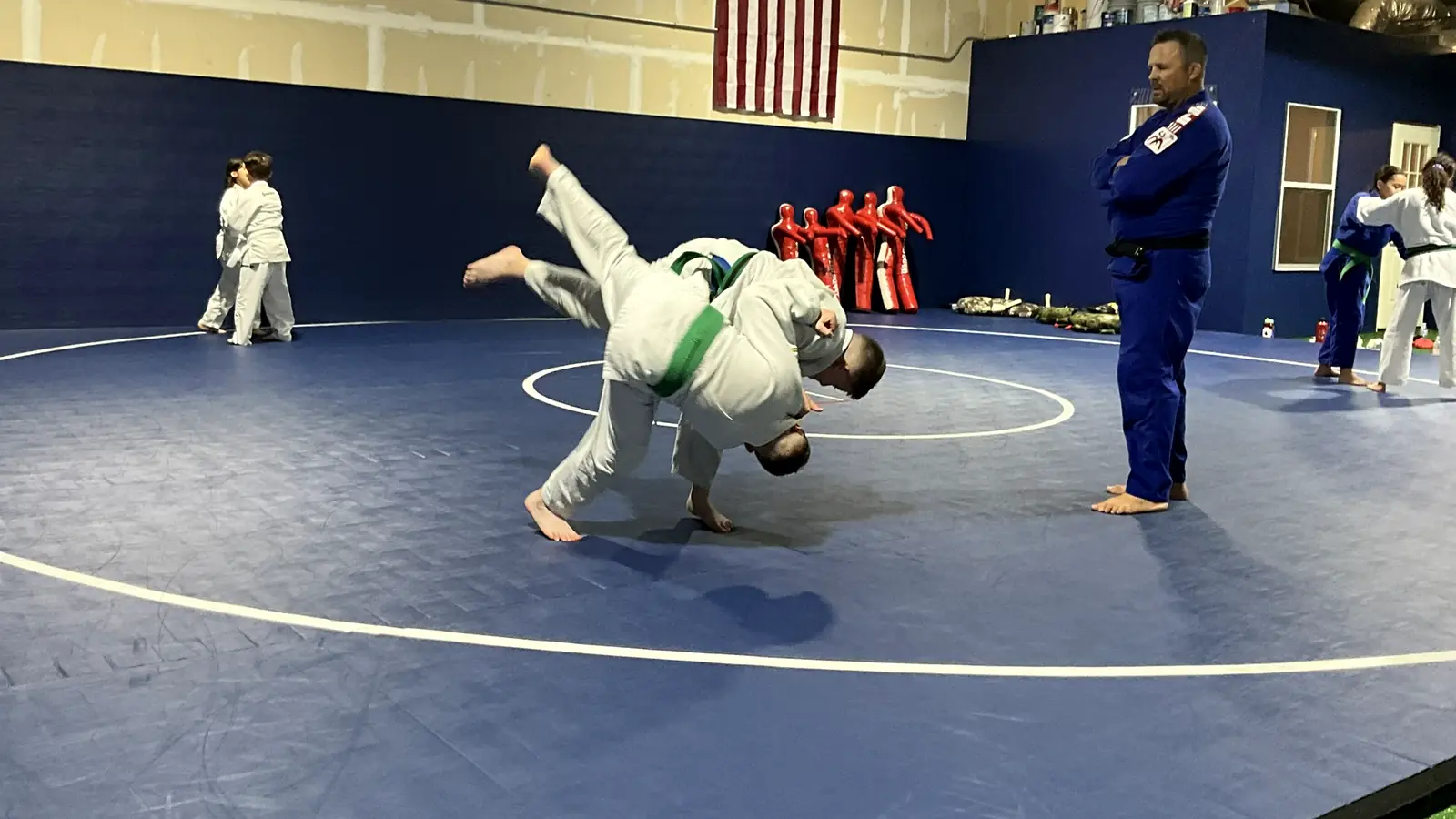
Kids and teen judo in Mustang
Judo teaches kids to fall without getting hurt, throw with control, and keep their head when someone is pushing back. Evening classes run Monday and Wednesday, with daytime sessions for homeschool and Academy students.
What your child actually learns
Judo means "the gentle way." The idea is to use an opponent's balance and momentum instead of brute strength, which is why a smaller kid with good technique can throw a bigger one.
Falling first
Every new student starts with ukemi, the breakfalls that let you hit the mat safely from any direction. Kids practice them every class. Parents tell us it's the skill that shows up outside the gym, on bikes, trampolines, and icy sidewalks.
Throws
Once falling is second nature, students learn nage-waza, the throwing techniques. Coach Jhonatan's own favorite is ippon seoi nage, a one-arm shoulder throw that works for every body type. Kids drill throws onto crash pads before trying them on a partner.
Pins and groundwork
Katame-waza covers holding an opponent down and controlling them on the mat. It's where kids learn patience and pressure, and it's a big part of how matches are won.
Randori
Toward the end of class, students do randori, a supervised free practice where they try their techniques against a resisting partner. Coaches match pairs carefully and stop rounds early when needed.
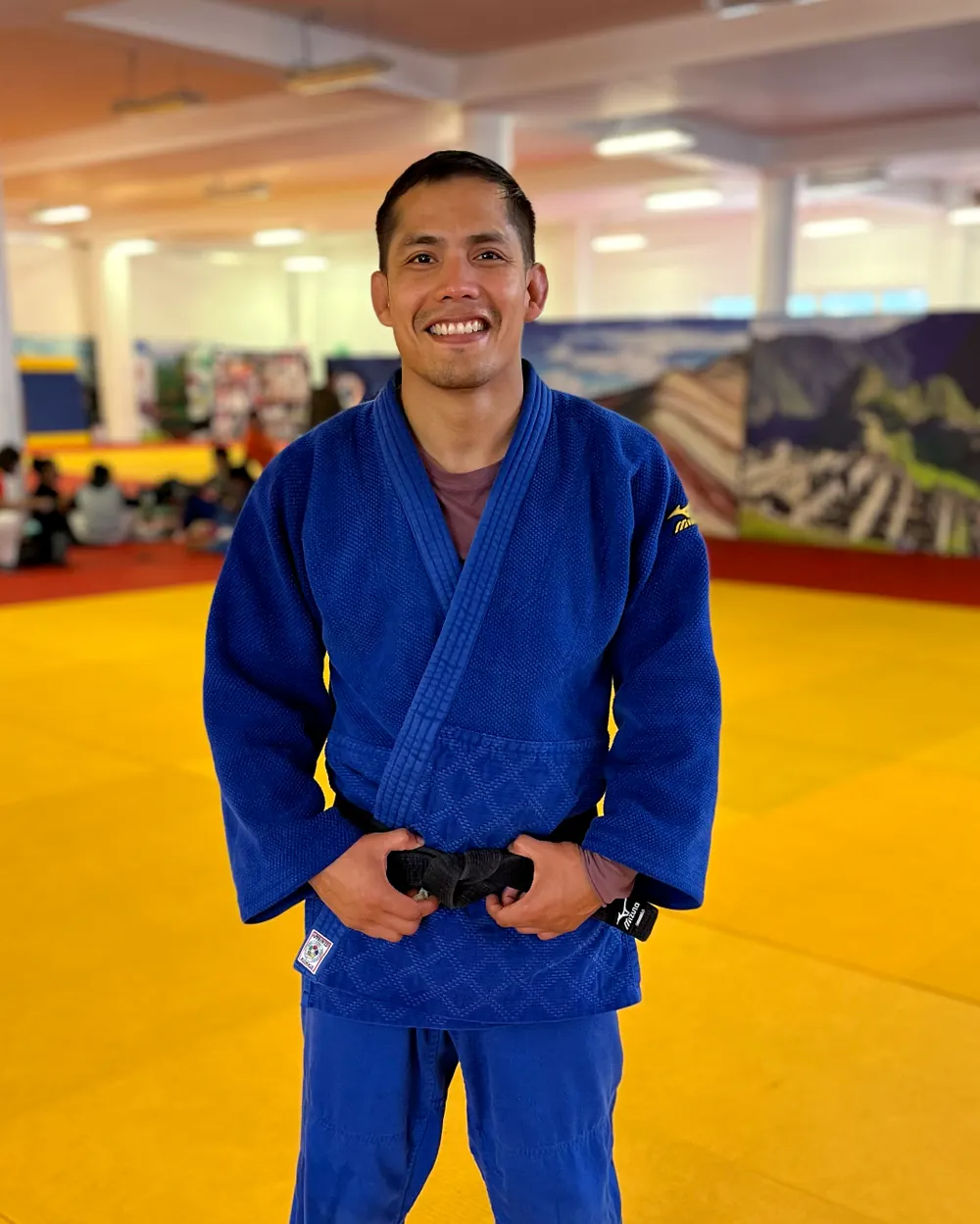
Coached by a champion who still competes
Jhonatan Gutierrez was a senior national judo champion in Peru and represented his country internationally, including the 2014 Pan American Championships and the Lima Pan American Opens in 2016 and 2017.
He also won bronze for Peru in Nage-no-Kata, the formal pairs demonstration of throwing techniques, with partner José Torres at the 2013 Bolivarian Games. That precision is how he teaches: slow, exact repetitions first, then speed.
He's still competing, too: in May 2026 he won the -73 kg division at the Panamerican Judo Tour in Guayaquil, Ecuador. He's a shodan (first-degree black belt) with seven years of coaching, a USA Judo member, and SafeSport trained.
More about Coach JhonatanA typical 90-minute evening class
The structure stays consistent, so new kids know what's coming.
- Bow in and warm upStudents line up, bow to the coach and the mat, then move through running, rolling, and mobility drills.
- BreakfallsBack, side, and forward falls, every class, for every rank.
- Technique of the dayA throw or pin broken into steps, drilled with a partner and on the crash pad.
- RandoriSupervised free practice, with pairs matched by size and experience.
- Bow outA quick recap, announcements for upcoming tournaments, and a bow to close.
For kids who want to compete
Dominion is a chartered USA Judo club and a member of the Oklahoma Judo Association, the only OJA club in Canadian County. Our students compete in OJA events around the state and in USA Judo tournaments nationally.
Competition is always optional. When a student is ready, Coach Jhonatan helps the family choose the right first event.
See the competition team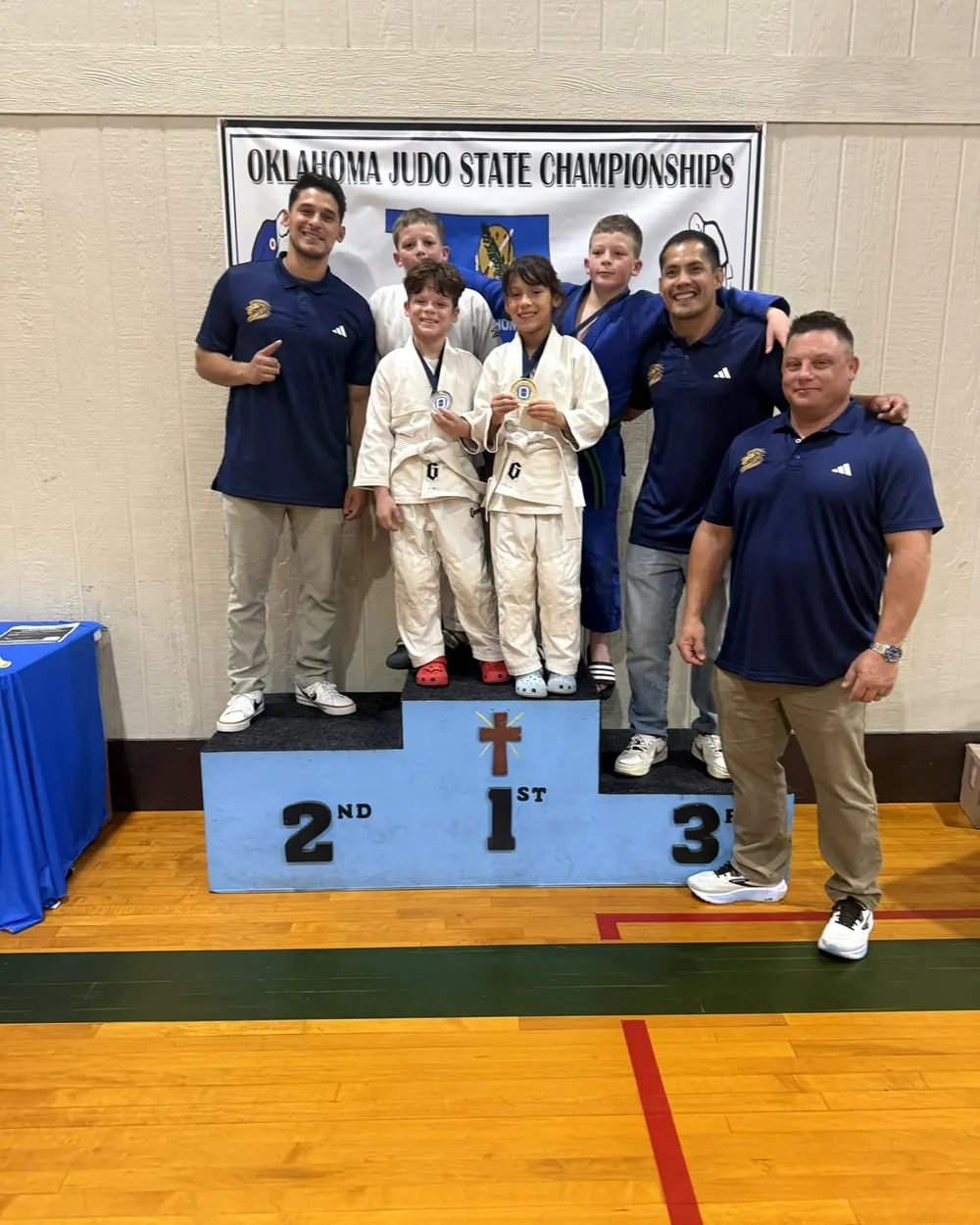
Judo questions from parents
Is judo safe for kids?
Judo is built around falling safely. Before students learn a single throw, they practice breakfalls (called ukemi) until landing becomes automatic. Classes use full competition mats and crash pads for throwing drills, and coaches pair kids by size and experience. There are no strikes or kicks in judo.
How is judo different from Brazilian jiu-jitsu or karate?
Karate is a striking art. Judo has no punches or kicks; it's about throwing a standing opponent and controlling them on the ground with pins. Brazilian jiu-jitsu grew out of judo and focuses mostly on ground fighting, while judo spends more time on standing throws. Judo is also an Olympic sport, with a clear path from local tournaments to national events.
Does my child have to compete?
No. Plenty of students train for fitness, confidence, and fun. Those who want to compete can enter Oklahoma Judo Association and USA Judo tournaments when their coach thinks they're ready.
My child is younger than 9. Can they join?
Sometimes. We evaluate younger kids case by case based on attention span and readiness. For ages 3 to 6, Tiny Tots is a parent-and-child class that builds the same basics.
Do we need to buy a gi?
Not to start. Your child wears a trial gi during the free week and keeps it if you sign up.
How do belts work?
Students start at white belt and earn new colors as their technique and knowledge improve. Coaches decide when a student is ready to test.

Try a judo class this week.
Monday or Wednesday at 6 pm. Your child wears a trial gi, and it's theirs if they decide to stay.